Breakdown · · 6 min read
Is AI making us dumber?
I walk the five moves on a question everyone has an opinion about.
The 60-second version
One line per move- 01Name the claim
'Dumber' hides three claims: fewer facts, worse reasoning, less patience. I test the second: reasoning on unfamiliar problems.
Jump to Move 1 ↓ - 02Find the assumption
It assumes answers equal thinking, effort was the point and tools subtract. Any of the three could fail.
Jump to Move 2 ↓ - 03Ask why until it stops
The why chain ends at a checkable fact: skills fade when skipped. The harm is skipped practice, not the tool.
Jump to Move 3 ↓ - 04Rebuild from what is certain
AI can weaken the steps we hand over and stop practising. That claim is smaller and more useful.
Jump to Move 4 ↓ - 05Test what breaks
The rebuild survives my attacks in a weaker form. Harm is possible, not certain.
Jump to Move 5 ↓
Go deeperHow I approach it
Everyone I know has a view on this one. Some say AI is a crutch. Others say it is a calculator for words. Both camps sound sure. I want to see what holds up when I slow down.
I use the five moves from the framework. I do not reach a verdict by the end. I reach a better question.
Go deeperMove 1: Name the claim
The claim is short. AI is making us dumber. The trouble sits in one word.
Dumber could mean we know fewer facts. It could mean we reason worse. It could mean we have less patience for hard problems. These are three separate claims. They need three separate tests.
Facts are the weakest of the three. We have never held all facts in our heads. We used books and then search engines. If the claim is only about facts, it is old news.
Reasoning is the one I care about. By dumber I mean this: a person who once could work through an unfamiliar problem now cannot. They need the answer handed over. That is the claim I will test.
Go deeperMove 2: Find the assumptions
The question hides assumptions. I find at least three.
Assumption one: an answer equals thinking
The question treats the answer as the product of thought. But an answer can arrive with no thought at all. If I copy a figure from a tool, I did not think. If I check the figure against the receipt in my hand, I did. The same tool supports both.
Assumption two: the effort was the point
The question assumes the struggle built the skill. Sometimes it did. Sometimes the struggle was only friction. Nobody needs to feel proud of hunting through a bill for one line. But struggling to work out why the bread will not rise is how a baker learns the oven. The question treats both kinds of effort as equal. They are not.
Assumption three: tools subtract
The question assumes a tool takes something away. A tool can also add. It can give a beginner a second opinion at midnight. It can make a hard question cheap enough to ask twice. Whether a tool adds or subtracts depends on how it is used.
Any of these could be wrong. If so, the question falls apart.
Go deeperMove 3: Ask why until it stops
I will run one chain. I start with the claim and keep asking why.
- AI makes us dumber. Why would it? Because we stop doing the thinking.
- Why would we stop? Because the answer comes without effort.
- Why does that matter? Because skills need use.
- Why do they need use? Because a skill is a habit of the mind. Habits fade when we skip them.
- Why do they fade? That is where I stop.
I stop because I can check that last link without any study. I have felt it. I stopped doing mental arithmetic the day I got a phone. I can still do it. I am slower than I was.
Notice what the chain shows. The harm does not come from the tool. It comes from the skipped practice. The tool is only the reason we skip.
Go deeperMove 4: Rebuild from what is certain
I will list what I am sure of. Each item is something you can check against your own life.
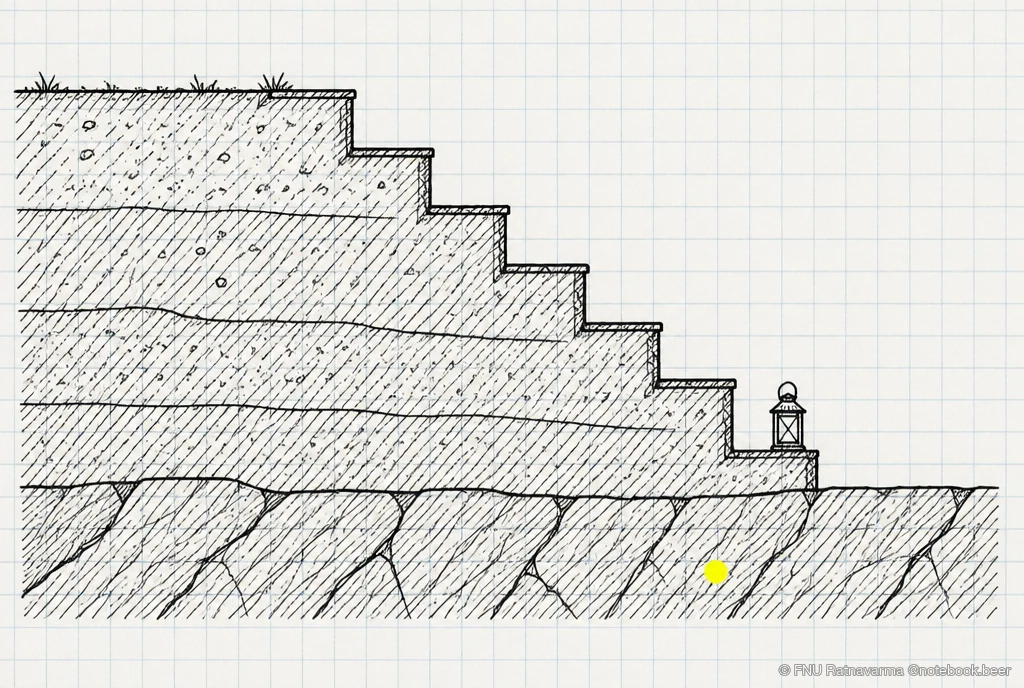
- A skill that is not used gets weaker. You have seen this in anything you learned once and dropped.
- A tool that does a step for you removes the practice of that step. This is true by definition.
- Not every step needs practice. I do not need to rebuild a spreadsheet engine to use one.
- Some steps are the skill itself. Judging whether an answer is believable is one of those.
- A tool that gives fluent answers makes the judging step easier to skip. A fluent answer feels finished.
From these five I can build upward. If a tool does the judging for me, I lose practice at judging. If a tool does the typing, I lose little. The harm depends on which step I hand over.
This is where the first claim breaks. The claim said AI makes us dumber. What I can show is narrower. AI can make us weaker at the steps we hand over and stop practising. That is a smaller claim and a more useful one.
I cannot show the rest from reasoning alone. How many people hand over the wrong steps is a question about behaviour. It needs observation. I do not have it. I will not invent it.
Go deeperMove 5: Test what breaks
Now I attack my own rebuild.
What if people hand over only the dull steps? Then the skill that matters stays intact. My worry would be a worry about nothing.
What if some people use the tool to practise more? A student can ask a tool to find the flaw in their argument. They get more rounds of practice than she could get alone. For her the tool adds.
What if the fading is real but harmless? Perhaps the lost skill no longer matters. A driver who cannot read a paper map may not need to. This could be true. It could also be a comfortable story. I would want to know what the driver does when the phone dies.
The rebuild survives these attacks, but only in a weaker form. It says harm is possible. It does not say harm is certain.
Go deeperA better question
The original question asks about the tool. It invites a yes or a no. Both answers teach us nothing.
I would ask this instead: which steps of my thinking am I handing over? Which should I keep?
That question has an owner. The owner is you. It has a test you can run today. Pick one task from this week. Write down each step. Mark the ones a tool did. Then ask whether any marked step was the judging step.
If the answer is yes, take it back. Do that step by hand for a month. See what changes.
Go deeperWhat would change my mind
I hold this view loosely. Here is what would move me.
- Careful observation showing that heavy users reason as well as before on new problems. Then I would worry less.
- Careful observation showing the reverse on problems with no tool in reach. Then I would worry more.
- A clear case where handing over the judging step improved the judgment. I have not seen one, but I would look.
- A way to tell the learner who practises with the tool from the copier. Then the question would split in two.
I have not run these observations. I will not claim their results. If you know of well-made work on any of them, bring it here. I will read it and say what I find.
Go deeperThree questions for the community
- Which step of your own work did you hand to a tool and stop practising? What did it cost you?
- How do you tell whether an answer is believable when you could not have produced it yourself?
- What is one thing you now do by hand on purpose?